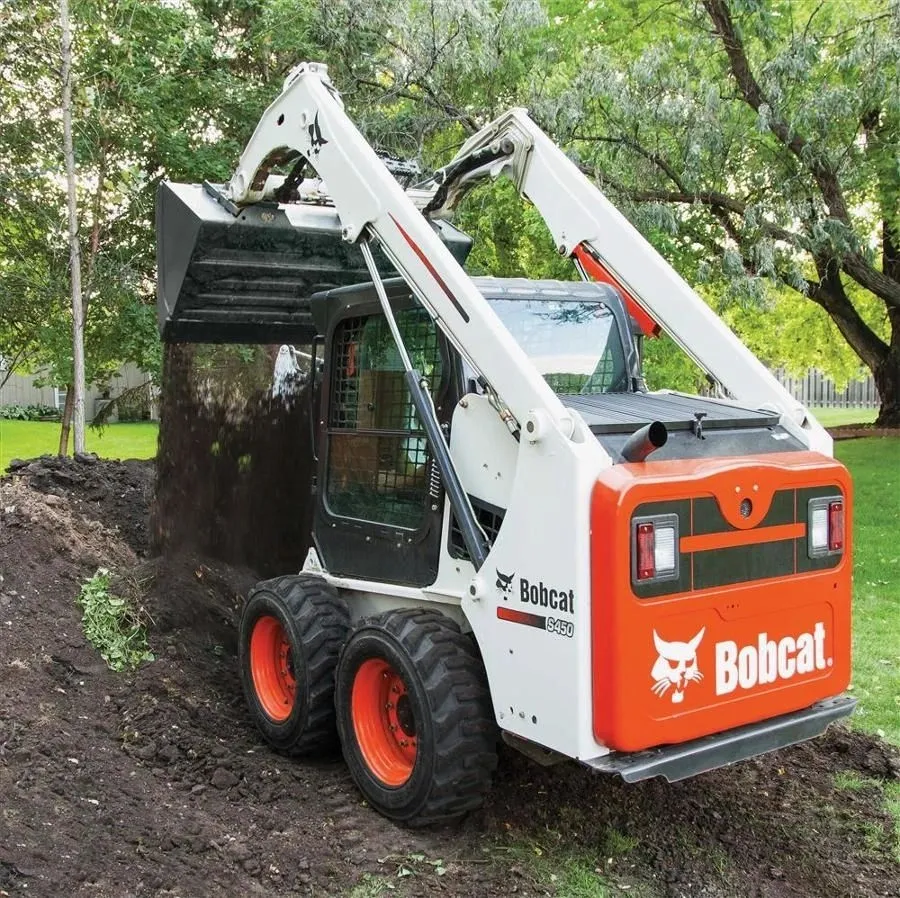
Most people call about a bobcat because something needs to be flattened. What they usually need is for water to end up somewhere sensible, which is a related but different problem, and it is the one that decides whether the job was worth doing.
South Florida is flat, the water table is high, and the rain arrives in volume rather than over an afternoon. Ground that is merely level is not the goal. Ground that drains is.
Clearing and Grubbing Are Two Steps
Clearing removes what is above the surface — brush, undergrowth, small trees, accumulated debris and whatever has been dumped over the years. It is quick and it makes an enormous visual difference, which is why people sometimes stop there.
Grubbing takes out what is below it: root systems, stumps and buried material. On a lot that is about to be sodded, paved or built on, skipping it causes problems later. Roots and buried wood decay, the ground above them settles, and you get depressions in a new lawn or cracking in a new slab a year after everything looked finished.
If a quote seems low for a heavily overgrown lot, this is usually the difference. Ask which one is included.
Grading Is About Where the Water Goes
The default rule is straightforward: the ground should fall away from structures, consistently, for the first several feet. Water that sits against a foundation or a slab edge finds its way in eventually, and in our climate it does not need long.
Beyond that, the water has to have somewhere to go once it has left the building — a swale, a drain, a low point that can hold it, or a route to the street. Regrading a yard so that it slopes beautifully away from the house and straight into a corner with no outlet simply moves the puddle.
Two things are worth saying plainly. Water pushed onto a neighboring property is a dispute waiting to happen, and in many South Florida communities it is also a code matter. And on a lot with a canal or drainage easement at the back, that easement generally has to stay clear and accessible — it is not spare land to grade over, and blocking it becomes a problem for more people than you.
Fill Dirt Is Not All the Same
"Bring in some dirt" hides a real decision.
- Clean fill is what you want under anything structural. It compacts, it stays put, and it does not decompose.
- Topsoil is for growing things. It goes on top, at the end, in the depth the planting needs.
- Organic or muck soil is the one to be careful about. It is common in parts of South Florida, it holds water, and it keeps settling as the organic content breaks down. Building or paving over it without addressing it produces exactly the sinking and cracking people assume was bad concrete.
Fill also has to be placed in layers and compacted as it goes. A deep layer dumped in one pass and rolled over on top looks finished and is not.
Access Decides the Machine
The most common surprise on a residential lot is that the equipment cannot reach the work.
A standard skid steer needs roughly four feet of gate opening. Beyond width, the things that stop a job are overhead lines and low branches on the approach, soft ground that will not carry the machine, and driveways or paver aprons that the owner would prefer not to have tracked over repeatedly with a loaded bucket.
None of these are insurmountable, but they change the equipment, the time and the price. They are also the reason a quote given over the phone from a description is worth less than one given after somebody has looked at the approach.
Know What Is Underground First
Everything expensive on a grading job is buried. Irrigation mains and low-voltage lighting run everywhere on established properties. Septic tanks and drain fields are easy to damage and unpleasant to repair. Utility services are sometimes shallower than anyone expects.
Locates are free in Florida through Sunshine 811 — dial 811 — and should be requested before machinery breaks ground. Worth repeating from experience: 811 marks utilities, not the sprinkler system a previous owner installed, so mark that yourself or accept that some of it will be found the hard way.
Trees You Are Keeping Need a Boundary
The quiet damage on clearing jobs is done to the trees left standing. Driving a loaded machine repeatedly over a root zone compacts the soil, and compacted soil does not hold the air and water roots need. The tree does not die that month. It declines over two or three years and nobody connects it to the work.
If specimen trees are staying, keep traffic off the ground beneath the canopy, and route the machine around it. Where roots have to be cut, cutting them cleanly matters more than people assume. Anything scheduled for removal should come out properly, with the stump ground out rather than buried on site.
Permits and the Trees You Cannot Just Remove
Requirements differ across Miami-Dade, Broward and Palm Beach and between municipalities within them, but the general shape is consistent: removing established trees frequently requires a permit, some species and sizes are protected, and replacement planting is sometimes a condition of approval. Fill and grading work can carry its own requirements, particularly where drainage is affected.
This is worth checking before the machine arrives rather than after. A cleared lot is difficult to un-clear.
Timing Around the Wet Season
Grading is easier and cleaner on dry ground. From roughly May through October, saturated soil makes compaction unreliable, machines rut ground that would otherwise carry them, and a finished grade can move before anything is planted on it.
Wet season work is entirely possible — it just wants a little more scheduling flexibility around the rain.
Before You Book
The single most useful thing you can tell a contractor is what the ground is for. Sod, pavers, a slab, a pool, a driveway and a garden bed all want different finished levels and different preparation, and it is far cheaper to grade once for the right purpose than to come back and adjust.
Marciano Landscaping provides bobcat and skid steer services — lot clearing, grading, fill spreading and demolition cleanup — plus tree work and commercial site maintenance across Miami-Dade, Broward and Palm Beach County. Call (786) 560-1827 and tell us what the finished ground needs to do.
Leave a Reply