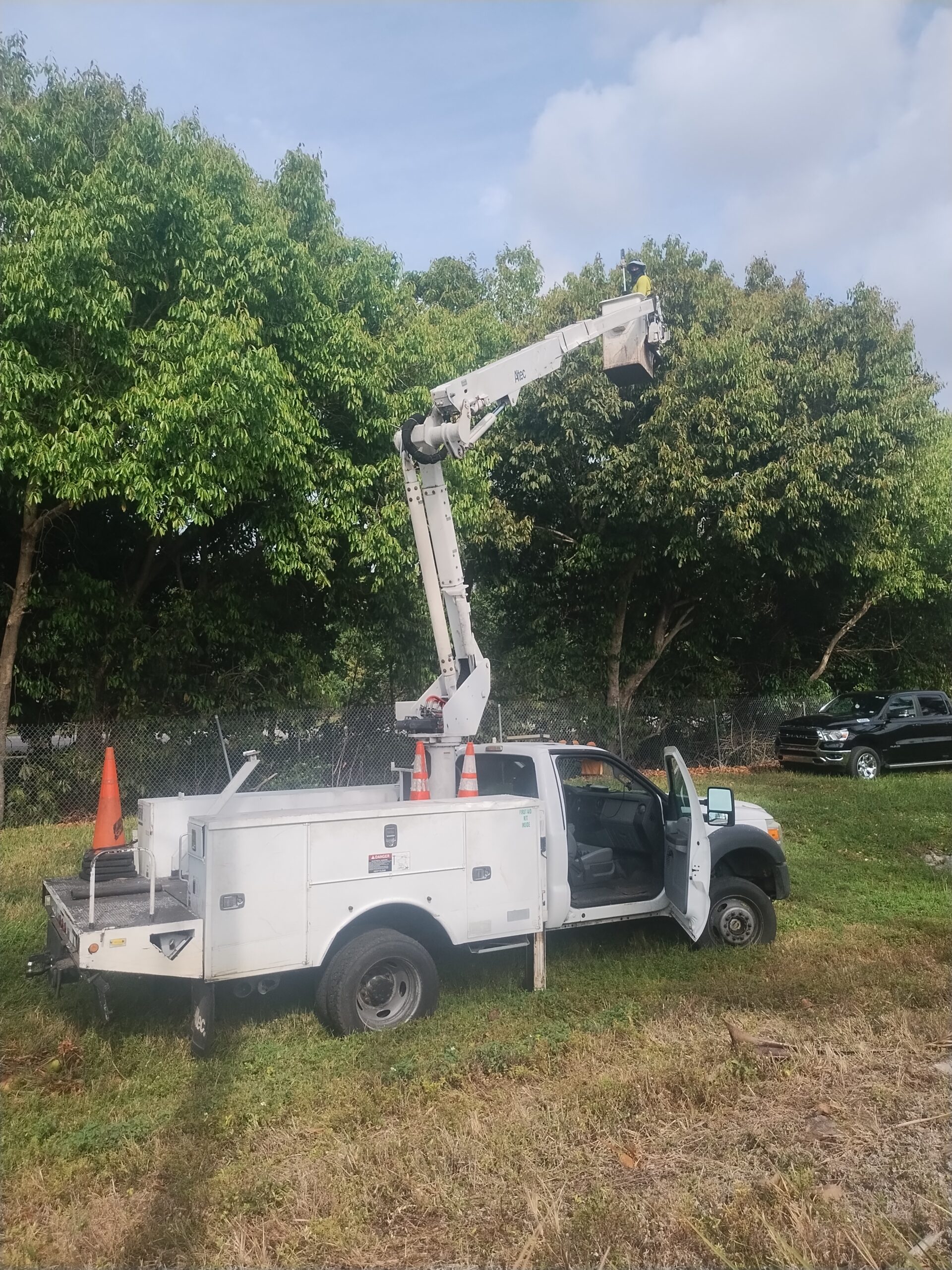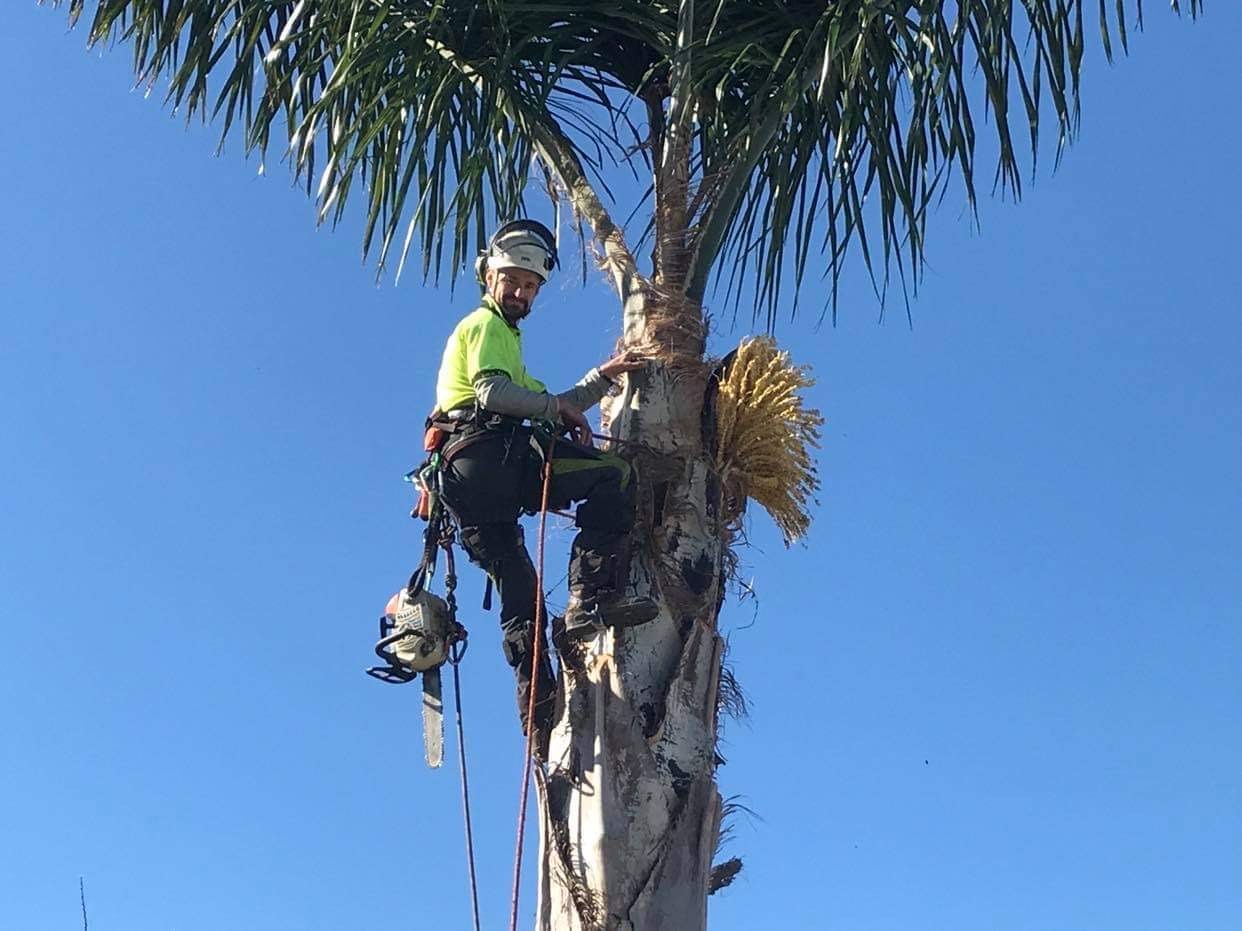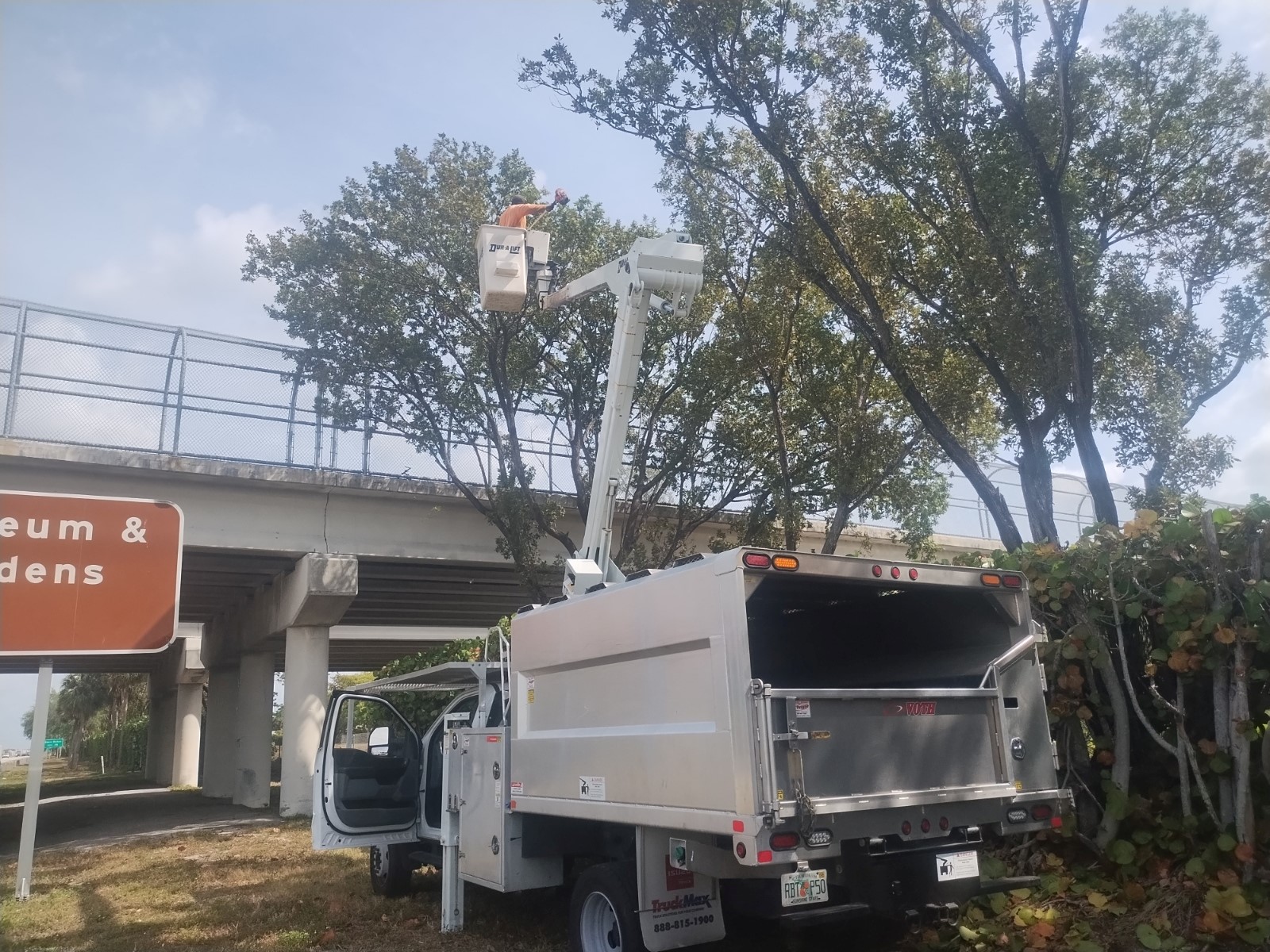
Tree removal and stump removal are two different jobs, and plenty of people find that out after the crew has left. The tree comes down, the debris goes away, and what remains is a flat-topped stump sitting in the middle of the yard that nobody mentioned.
Whether that stump needs to come out depends less on how it looks than on what is going to happen in that spot, and on what the stump is going to do if you leave it.
A Stump Is Not Just Cosmetic in South Florida
In a cooler, drier climate a stump sits there for years doing very little. Here it decays fast, stays damp, and becomes a food source close to the ground.
The concern people raise most often is termites. To be precise about it: a decaying stump does not create a termite problem out of nothing, but it is a well-recognized conducive condition — a source of soft, moist wood sitting in soil, often within a few feet of a structure. Pest control inspectors flag them for exactly that reason, and if the stump is near a foundation, a deck or a fence line, that is the argument for taking it out.
The rest of the case is more ordinary. Stumps and surface roots are a genuine trip hazard on a lawn, they damage mower blades, they hold standing water in the hollow that forms as they rot, and they make good habitat for rodents and wasps.
Grinding or Full Removal
There are two ways to get rid of a stump, and they are not priced or executed alike.
Grinding uses a rotating cutting wheel to reduce the stump and the top of the root flare to chips, below the level of the soil. It is fast, it is contained, and it leaves the surrounding lawn largely intact. It is what the great majority of properties need.
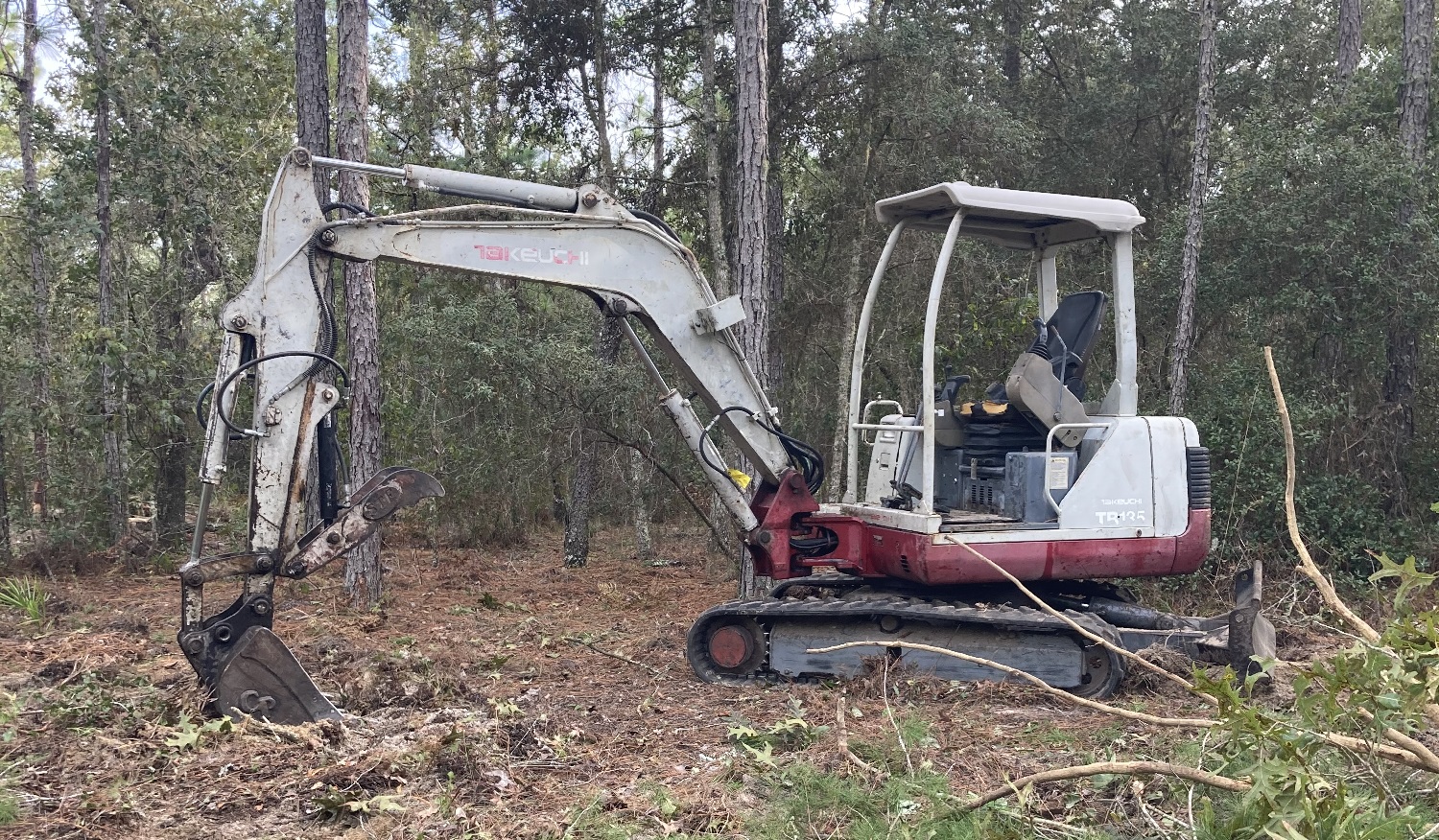
Full excavation means digging the stump and its major root system out of the ground, usually with a machine. It is slower, it costs more, it leaves a substantial hole, and it tears up whatever is around it. It is the right call when the ground is about to be built on, when a large root plate is in the way of construction or a pool, or when the site is being cleared entirely — in which case it usually happens as part of the lot clearing and grading rather than as a separate stump job — see lot clearing and grading for how that work is planned.
If the answer is sod, mulch or a garden bed, grinding is almost always enough.
How Deep Is Deep Enough Depends on What Comes Next
People ask for a depth in inches. The more useful question is what is going in that spot.
- Sod or lawn — grinding below grade with enough depth for topsoil over it is fine
- A new plant or tree — needs to go deeper, and the spot needs preparing rather than just filling
- Concrete, pavers or a slab — deeper again, because decaying wood under a hard surface means settlement and cracking later
- Nothing in particular — standard depth, topped with soil and seeded or sodded
Tell the contractor the plan for the area before the work is quoted. Regrinding a stump because the first pass was not deep enough for a slab is an avoidable second visit.
The Species That Come Back
Grinding removes the stump. It does not, on its own, kill an aggressive root system, and South Florida has several species that will push new shoots from the remaining roots and be back within a season.
Ficus is the one people meet most often, and it is persistent. Brazilian pepper, schefflera and carrotwood behave similarly. With these, the job is not finished when the grinder stops — the root system needs treating, or you are cutting suckers out of the lawn for the next two years.
If you are removing one of these, raise it before the work starts rather than after the sprouts appear.
What Is Underneath Matters
The hazards on a stump job are almost all below ground and invisible. Irrigation lines and sprinkler heads run close to mature trees more often than not. So do low-voltage lighting cables, and on plenty of South Florida properties the utility service runs shallower than anyone expects.
In Florida, locates are free and are requested through Sunshine 811 — dial 811 — and they should be called in before machinery goes into the ground near a service. A responsible contractor will raise this before quoting. Marking your own irrigation is worth doing too, since 811 covers utilities, not the sprinkler system somebody installed years ago.
You Are Left With Chips and a Hole
Grinding produces a surprising volume of material — considerably more than the stump appeared to contain, because the chips are loose. Two decisions follow.
The chips can stay as mulch or be hauled away. As mulch they are perfectly usable on beds and around trees, though they are coarse and they will settle noticeably.
Whatever is backfilled into the hole will also settle. Chips alone will sink over the following months and leave a depression, which is why the hole should be topped with soil rather than filled with grindings if you want a level lawn. It is normal to need to add more soil once, a few weeks later.
Replanting in the Same Spot
The instinct after removing a tree is to put a new one in the same place. It is worth waiting.
Ground full of fresh wood chips is a poor rooting environment. As the chips break down, soil microbes draw on available nitrogen to do it, and the new plant competes for what is left — which is why replacements planted straight into a ground stump so often sit there looking yellow and stalled.
If you want a tree in that exact spot, the better approach is to grind deeper, remove the chips rather than backfilling with them, and bring in soil. If the location can shift a few feet, shifting it is easier than any of that.
Timing After the Tree Comes Down
Fresh stumps grind more easily than old, dried, hardened ones, so doing both in one visit is usually the efficient option and avoids paying twice to bring equipment out.
Marciano Landscaping provides stump grinding and removal alongside tree trimming and removal across Miami-Dade, Broward and Palm Beach County. Call (786) 560-1827 and tell us what is going in that spot.