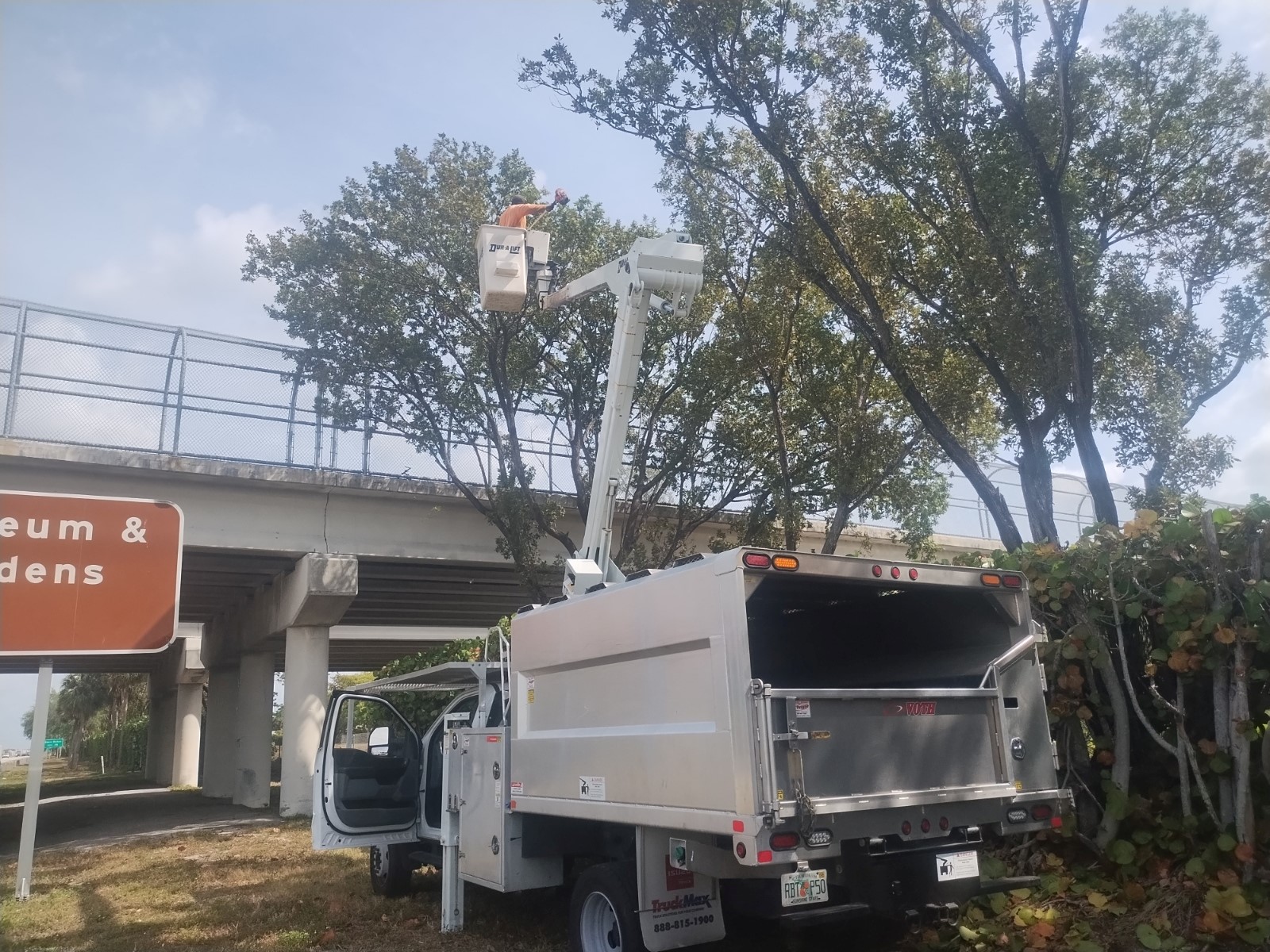
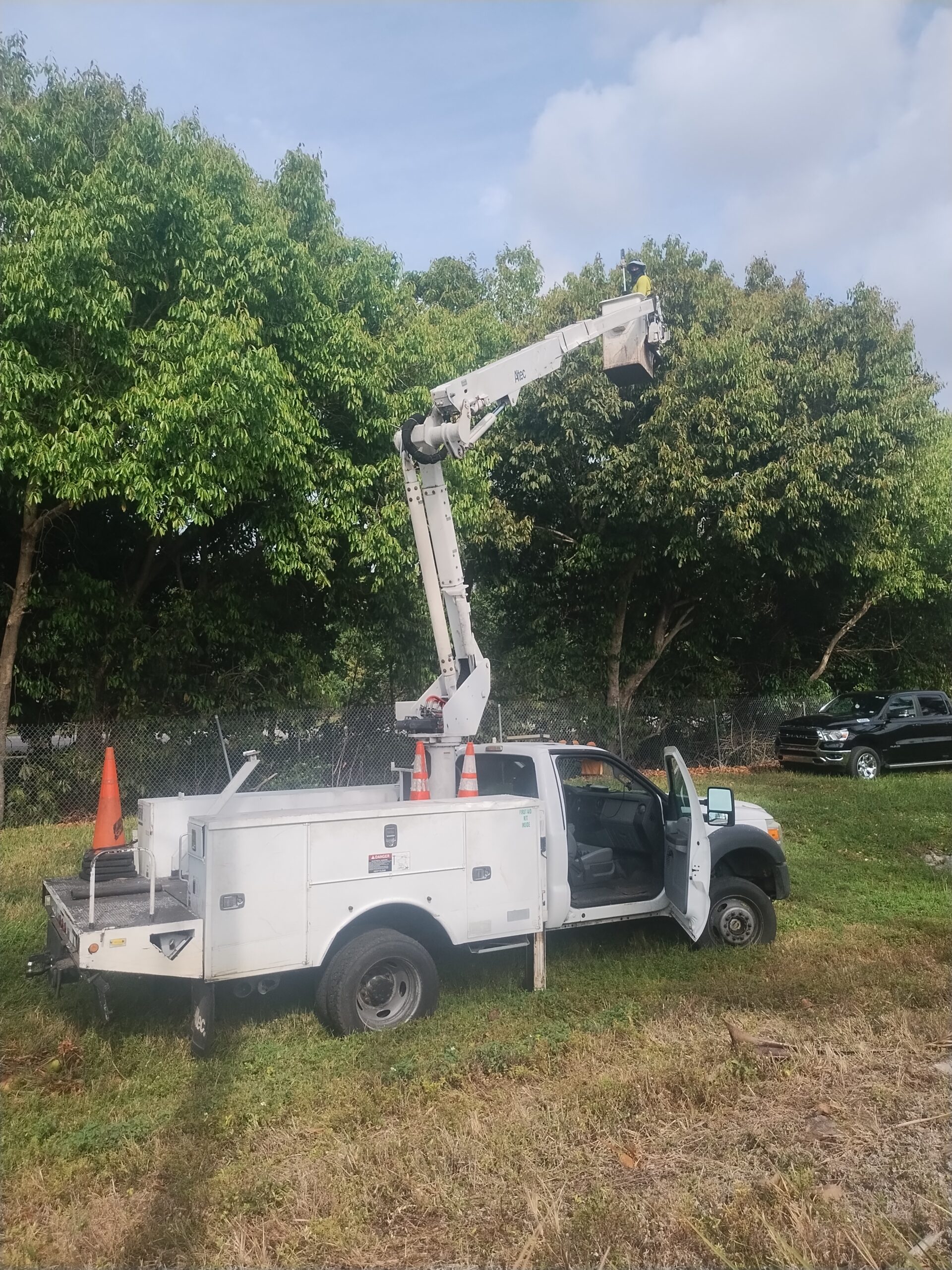
The day after a storm is the worst time to make decisions and the most common time to make them. Crews are knocking on doors, neighbors are comparing quotes across fences, and the tree across the driveway is the only thing anyone can think about.
Most of the expensive mistakes people make after a South Florida storm happen in that first forty-eight hours. Here is a working order for what to do, what to leave alone, and what to be careful of.
First: Assume Every Downed Line Is Live
Nothing on a property is worth approaching a downed conductor for. Power lines do not have to arc or spark to be energized, and a limb resting on a line will carry current into whatever it is touching, including a fence or a wet lawn.
Report it to the utility and stay clear. No tree company should be cutting anything in contact with a service line before the utility has cleared it — if one offers, that tells you what you need to know about them.
Photograph Everything Before You Move It
This is the step people skip, and it is the one that costs the most.
Before any cutting or dragging, take photographs from several angles: the tree or limb where it fell, what it landed on, and the wider context showing the property. Include something for scale. If a limb went through a screen enclosure or a roof, photograph it in place, then again from inside if it is safe to do so.
Once a crew has cut and hauled, the evidence is gone. Policies and claim requirements vary, and what your insurer will and will not cover is a question for your insurer — but no policy is helped by an undocumented pile of mulch. Keep receipts and written scopes of work for the same reason.
Triage: Urgent, Soon, and Later
Urgent — anything blocking access to the property, anything resting on a structure, and anything still suspended in a canopy. A limb caught in the branches above a walkway is the most dangerous thing on most properties after a storm, and it is the least likely to be noticed.
Soon — leaning trees with lifted root plates, split trunks, large tears where limbs pulled away, and blocked canals or drainage easements. None of these are emergencies on a clear day, but the next rain changes that.
Later — general debris, cosmetic damage, replanting, and the structural pruning that will keep the same limbs from failing next season.
The Hangers Are the Real Hazard
Once the wind stops, attention goes to what is on the ground. The material that injures people is usually still overhead.
Broken limbs lodged in a canopy can sit for weeks and come down without warning, often on a still day. They are difficult to spot from directly underneath, which is exactly where people stand to look. Walk the property from a distance and look up into the canopies against the sky. If you see anything broken, hanging, or resting at an angle it should not be, keep people out from under it until it is removed.
A Leaning Tree Is Not Automatically a Dead Tree
Trees that lean after a storm fall into two groups. If the root plate has lifted — if you can see soil heaved on one side, or the trunk moves when the wind picks up — the anchorage is compromised and the tree usually has to come out — along with the stump it leaves behind.
A tree that is simply leaning, with the root plate intact and no cracking at the base, can often be assessed and kept. Palms in particular will straighten on their own over months.
The mistake is deciding either way in the first two days. Unless it is threatening a structure, a leaning tree can usually wait for a proper look.
Debris and Municipal Pickup
Most South Florida municipalities run storm debris collection after a declared event, with rules about separation and placement that differ by city and change from storm to storm. Vegetative debris generally has to be kept apart from construction material and household items, and piles cannot block sidewalks, drains or hydrants.
Two practical points. Storm debris pickup can take weeks in a bad season, so a pile at the curb is a long-term feature rather than a temporary one. And material stacked near a storm drain will find its way into it, which turns a yard problem into a flooding problem for the street.
If you need it gone rather than collected, it has to be cut, chipped and hauled.
Canals and Drainage Come First on Commercial Sites
For HOAs and commercial properties, the priority order is different from a residential lot. Blocked channels and clogged drainage easements affect every resident, not one, and they are what turns the next rainfall into standing water and complaints.
Clearing storm material out of canals and waterways usually matters more in the first week than tidying the common areas, even though the common areas are what people see.
Be Careful Who You Hire
Storms bring crews into South Florida from out of the area, and the pattern is consistent: door-to-door solicitation, cash up front, no written scope, no local address, and a truck with no lettering or lettering that does not match the paperwork.
Before anyone cuts anything, confirm the basics. Ask for the license and proof of liability insurance, and ask for a certificate naming you. Get the scope in writing, including whether hauling is included. Do not pay in full in advance. If a crew is pressuring you to sign immediately because they are "in the neighborhood today," that pressure is the product.
An uninsured crew injured on your property becomes your problem, and that is a far larger exposure than the tree.
Then Deal With Next Season
Once the urgent work is done, the useful question is which trees failed and why. Storms are an unusually honest assessment of a property — the limbs that came down are generally the ones that were already dead, poorly attached, or carrying too much sail. Addressing that in the winter is what makes the next storm quieter — see when to trim trees before hurricane season for the timing.
Marciano Landscaping provides storm response, tree trimming and removal, stump grinding and debris hauling across Miami-Dade, Broward and Palm Beach County. Call (786) 560-1827.